✨ About✨
Kristina Malcolm is a metalsmith, educator, and writer based in Mogadore, Ohio. She has been running her own metalsmithing business since 2004 and brings over 30 years of experience in jewelry, sculpture, casting, and craft education to her work. Known for her expressive silver jewelry, experimental casting techniques, and poetic approach to making, she creates objects that hold memory, movement, and meaning.
Her practice bridges traditional metalsmithing with curiosity, play, and material intelligence. She specializes in low-tech and small-scale casting methods including tufa, cuttlebone, sand, and investment casting, often working with recycled materials and emphasizing accessibility for home jewelers and emerging makers. Her work has been exhibited in solo and group exhibitions, and she is the recipient of the 2026 Ohio Designer Craftsmen Excellence in Metals Award.
In addition to her studio practice, Kristina is a dedicated teacher whose classes combine technical skill, encouragement, and a deep respect for the emotional and cognitive value of Craft. She teaches online and in person for art schools, craft schools, and universities, and her research and writing explore the therapeutic power of making, movement, and embodied creative practice.
Events
Summer classes
Go directly to Pocosins website to register for class with them!
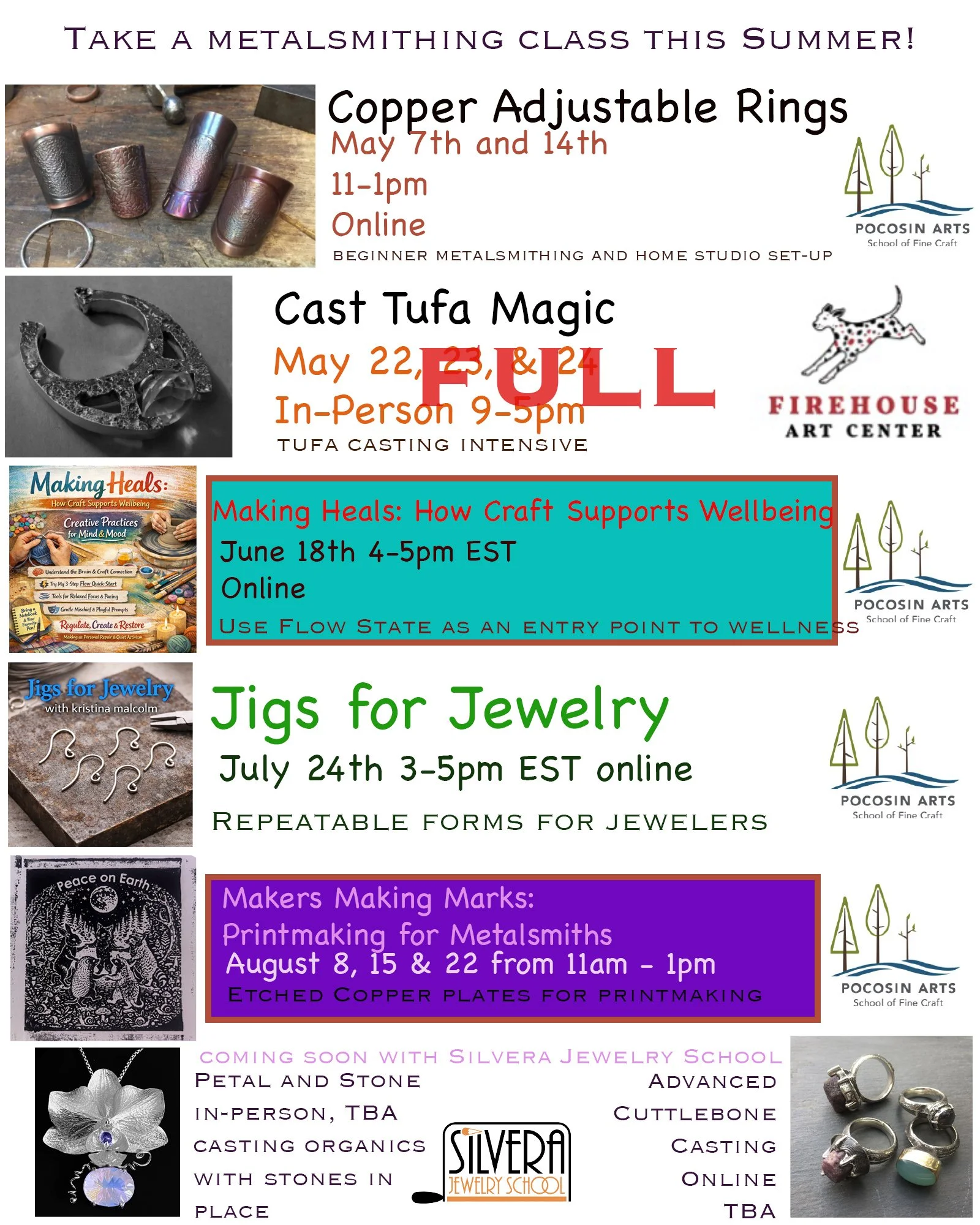
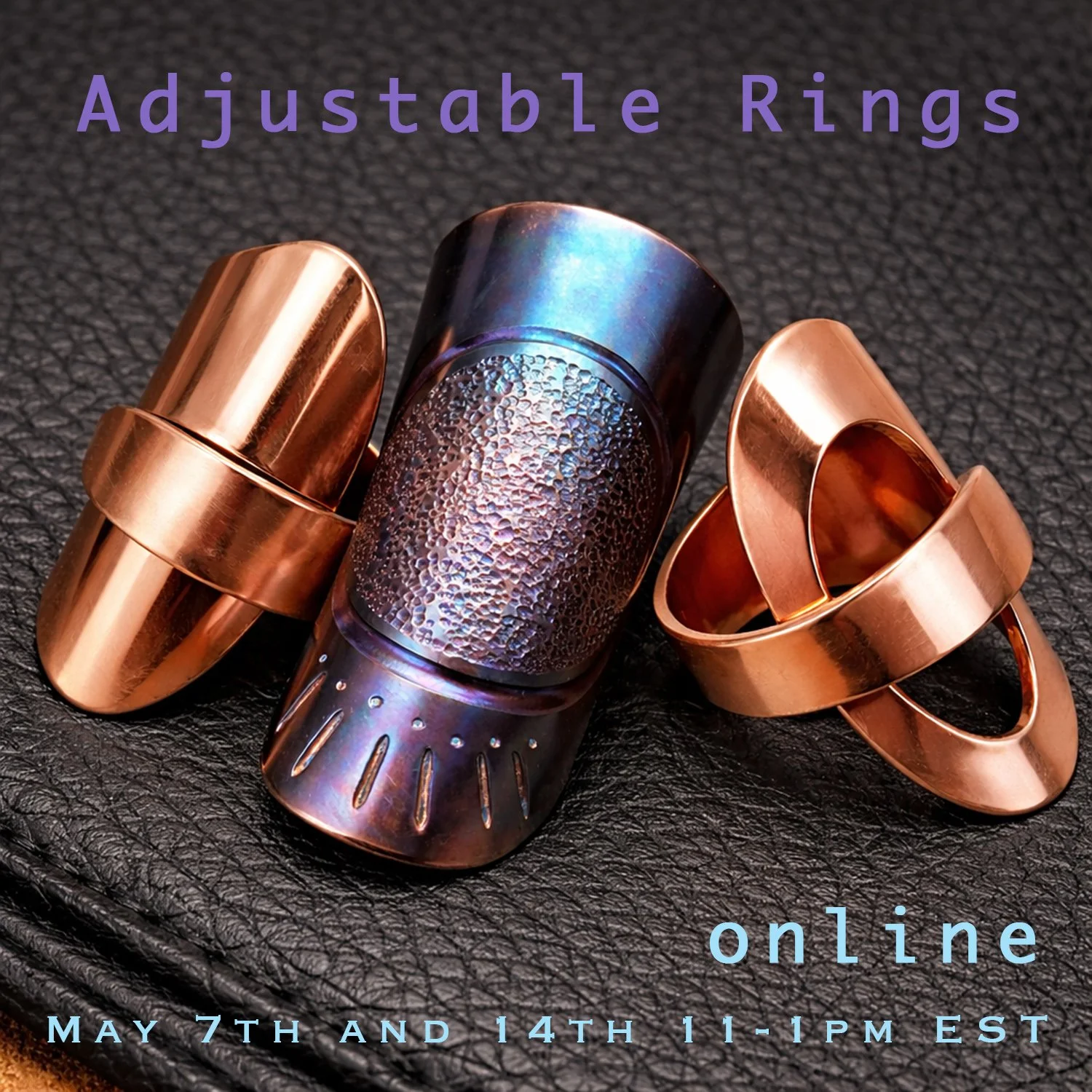

Start Making Jewelry Now: Adjustable Copper Rings
May 7 & 14, 2026
from 11- 1pm EST
Online
Class One — Set-Up, Intro, Design, Measure, Cut
We’ll start with a warm overview of what an adjustable ring is and why it’s the perfect first project. We’ll set up a simple home workspace that supports success—better light, steadier posture, a bench pin solution that works at a table, and calm, practical safety habits. Then we’ll cover tools and materials in a way that feels doable, with copper as our accessible hero. You’ll learn ring design essentials—comfort, proportion, and planning an opening that fits real hands—then measure confidently and fit on a ring mandrel. You’ll turn your idea into a clean template, learn jeweler’s saw fundamentals, and cut your ring blank with clarity and control.
Class Two — Stamping, Texture, Form, Finish/Polish, Patina
We’ll begin with a quick check-in and troubleshooting and then next comes personality: a stamping demo covering spacing, alignment, crisp impressions, and easy fixes, followed by simple textures that look intentional and uniquely yours. Then form your ring to the mandrel—shaping for comfort and dialing in adjustability without fear. We’ll refine and elevate with a filing strategy, sanding progression, softened edges, and polish methods that create a satisfying, wearable finish. We’ll close with a patina demonstration for controlled copper color, plus sealing and care so it lasts, and a final fit test that leaves you ready to repeat the process confidently.
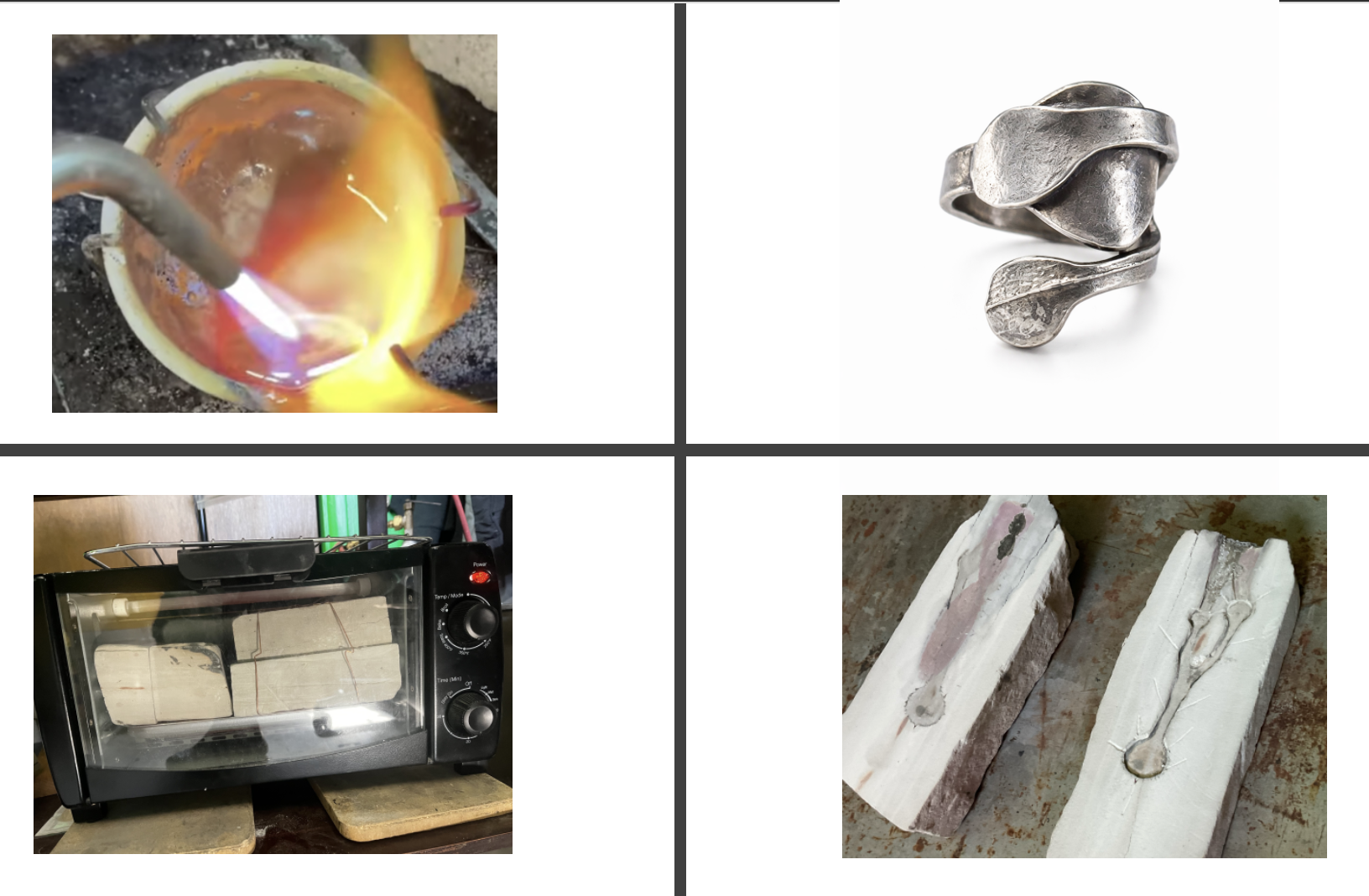
✦ Cast Tufa Magic ✦
✦3-Day Intensive ✦
FULL

May 24, 25, 26th
9-5pm
online
Welcome to one of the most magical and under-celebrated processes in metalsmithing: tufa casting—a technique that blends soft volcanic stone, molten silver, and the joy of hand carving into a process that’s part geology, part alchemy, and all Craft.
Tufa is a porous volcanic stone found in the American Southwest. Casting with it is a tradition rooted in Diné (Navajo) and Hopi silversmithing. In the late 1800s, Indigenous makers began carving directly into this stone to create detailed molds, adapting colonial metal tools into a new, place-based practice. Tufa molds capture texture, detail, and gesture with stunning clarity. Each mold becomes a one-of-a-kind print made from earth, fire, and imagination.
While sand casting and other mold making techniques appear across many ancient cultures, tufa casting as we know it today exists nowhere else on Earth. It’s uniquely American—both in its material and its cultural roots in Indigenous silversmithing. There is no direct counterpart in European, African, or Asian casting traditions. It’s a true regional artform—born of land, story, and survival.
Tufa molds are carved by hand, reusable, and filled with molten metal. No wax. No vacuum. Just fire, stone, and heart—and a process that welcomes both precision and play. You might get a perfect pour, or something wild and unpredictable—but it will always be yours.
This intensive is also designed to help you build a sustainable studio rhythm. Drawing from my Healing Hands research in Craft, nervous system regulation, and the cognitive-emotional benefits of skill-based making, we’ll establish simple studio wellness practices that support mental health: pacing, breath breaks, safe setup habits, and a process that protects both your mind and body as well as your attention.
What we’ll do (3-day flow)
Day 1 — Carve the Mold
Design, two-part mold planning, carving strategies & tools, sprues/vents, texture, and mold prep. Complete one pourable mold during class time.Day 2 — Warm + Pour
Warm the mold. Discuss heat management, all about melting recycled sterling and alloys, pouring, troubleshooting.Day 3 — Finish + Embellish
Cleanup, filing/sanding, forming and annealing casting metal, polishing/tumbling, optional soldering or cold connections. (If you bring stones, we’ll set stones.)
What you’ll leave with
One or more finished cast pieces (time = pour size dependent)
A reusable tufa mold and the knowledge to keep casting afterward
Practical applications for recycling silver responsibly
Studio wellness strategies to support long-term mental health
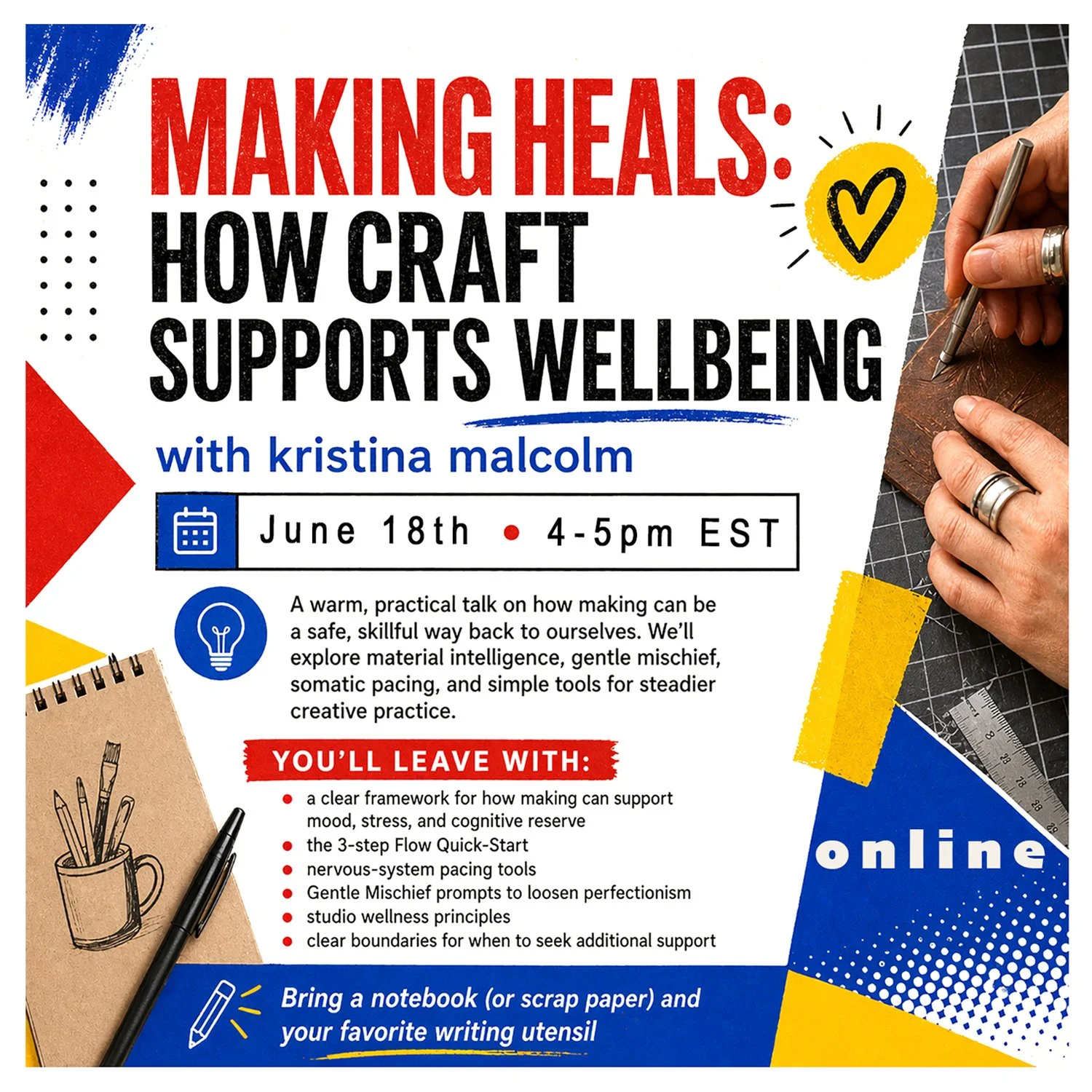
Making Heals: How Craft Supports Wellbeing.
Outline
We’ll begin with a warm welcome and our simple premise: that making can be a safe, skillful way back to ourselves. From there, I’ll offer a pinch of neuroscience in plain language: how attention, sensory feedback, rhythm, and repetition-with-variation can support regulation, resilience, and steadier mood. We’ll shift from outcome to process-driven practice, reframing mistakes as information (not identity) and using “tiny wins” to rebuild momentum. We’ll explore Material Intelligence— the quiet conversation between your hands and matter—learning to listen to resistance, heat, texture, and weight instead of forcing an ideal. And, of course, we’ll discuss Gentle Mischief: permission to play, break rules safely, and make weird stuff on purpose as a direct antidote to perfectionism and shame. We’ll ground it all with somatic pacing and studio wellness—breath, posture, micro-breaks, intensity control, and environmental cues that reduce overwhelm and help making feel possible again. We’ll close with my 3-step Flow Quick-Start, a simple practice you can actually use, and a brave, hopeful invitation: making as personal repair—and quiet activism in a world that benefits when we feel stuck. Think of this as an empowering companion to your practice.
Course Outcomes
You will leave with:
• 🧠 A clear, non-jargony framework for how making can support mood, stress, and cognitive reserve.
• ⚡ My 3-step Flow Quick-Start to stay engaged longer.
• 🌬 Practical nervous-system pacing tools (breath, posture, breaks, intensity control).
• 🎭 A starter set of Gentle Mischief prompts to loosen perfectionism and invite play.
• 🧰 Studio wellness principles for a safer, steadier, more energizing creative routine.
• 🧭 Clear boundaries: when to seek additional support.
✨ Bring a notebook (or scrap paper) and your favorite writing utensil
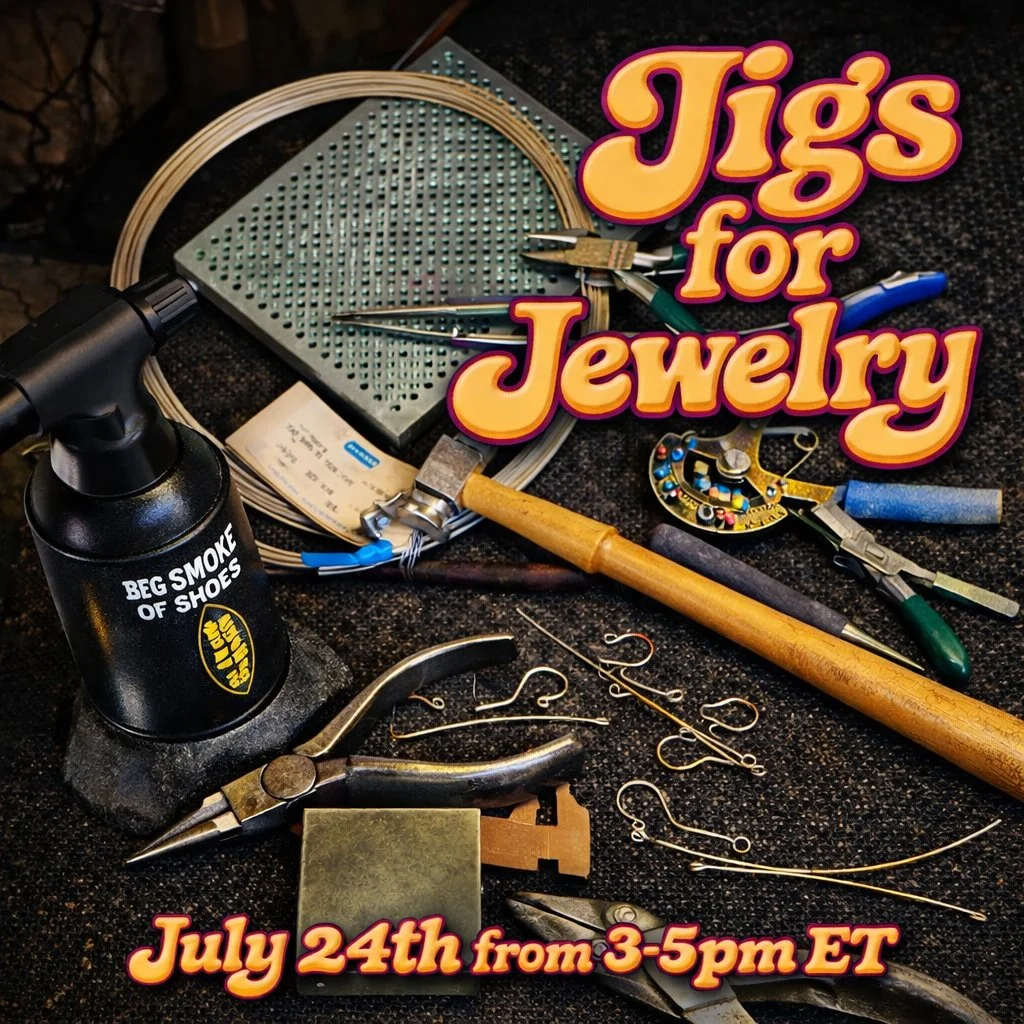
Jigs for Jewelry:
Consistent Forms Every Time
This two-hour workshop introduces jig-making as a practical system for producing consistent jewelry components. Students will design and build simple jigs and use them to create repeatable forms such as French hook ear wires, jump rings, and other variations. The session begins with an overview of jig function, layout, and tool selection, followed by guided design and demonstration. Students will learn how to form wire using jigs for consistent shaping and alignment, then move into torch balling wire with a hot shot torch. We will also cover wire selection, gauge considerations, straightening techniques, and how different materials behave during forming.
The workshop continues with work hardening and finishing methods to ensure durability, comfort, and clean, professional-quality results. Attention will be given to proportion, curve, and surface refinement so findings are not only consistent, but wearable and well-resolved. Students will also learn simple strategies for batching and efficiency, allowing them to produce matching components without over-measuring or slowing down their process.
Emphasis is placed on efficient, repeatable workflow and building confidence through consistent making. By the end of the session, students will have created a custom jig, produced finished components, and gained skills in forming, hardening, and polishing. Students leave with both physical tools and a repeatable system they can continue using in their own studio practice, adaptable to future designs beyond those demonstrated in class.
Makers Making Marks: Printmaking for Beginners
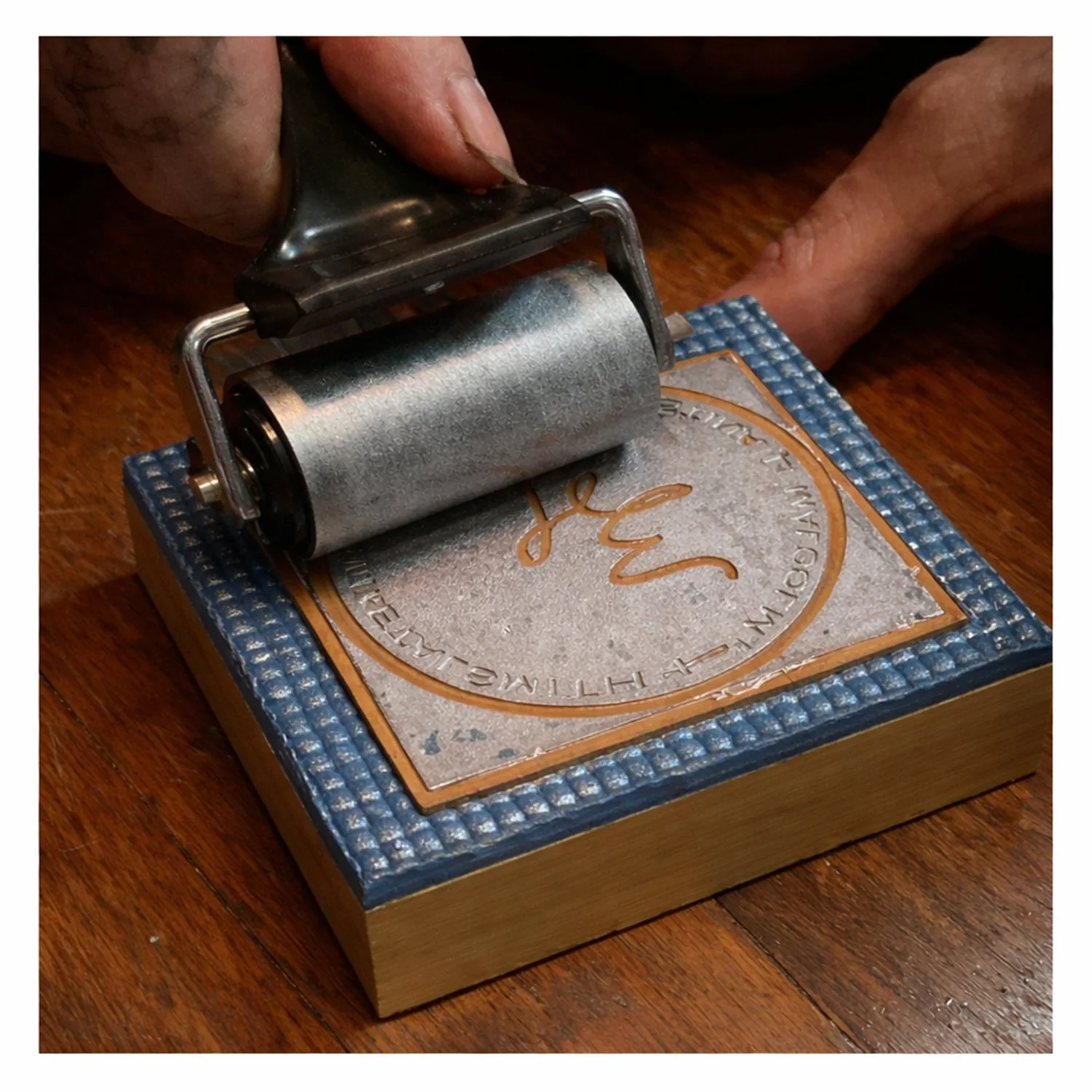
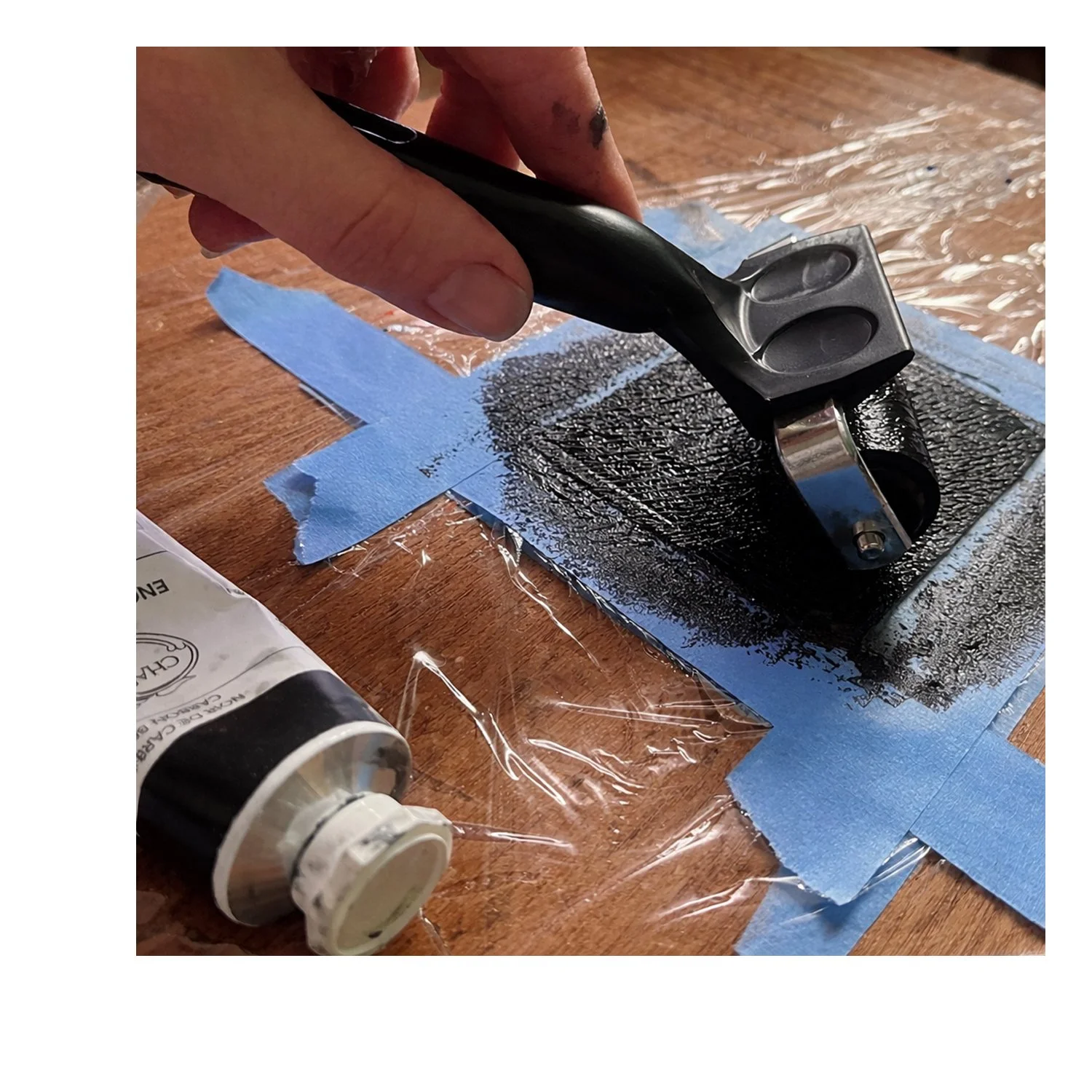
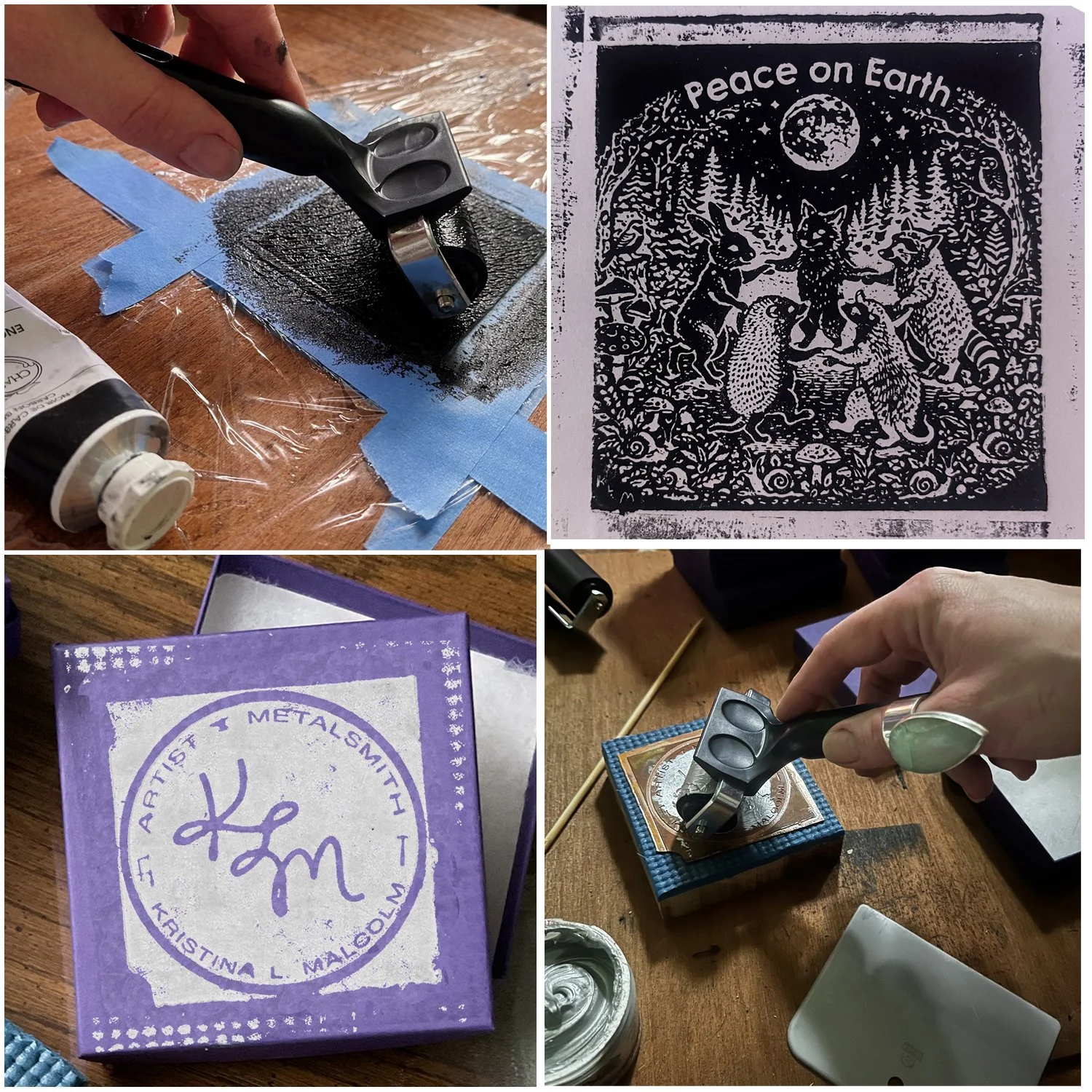
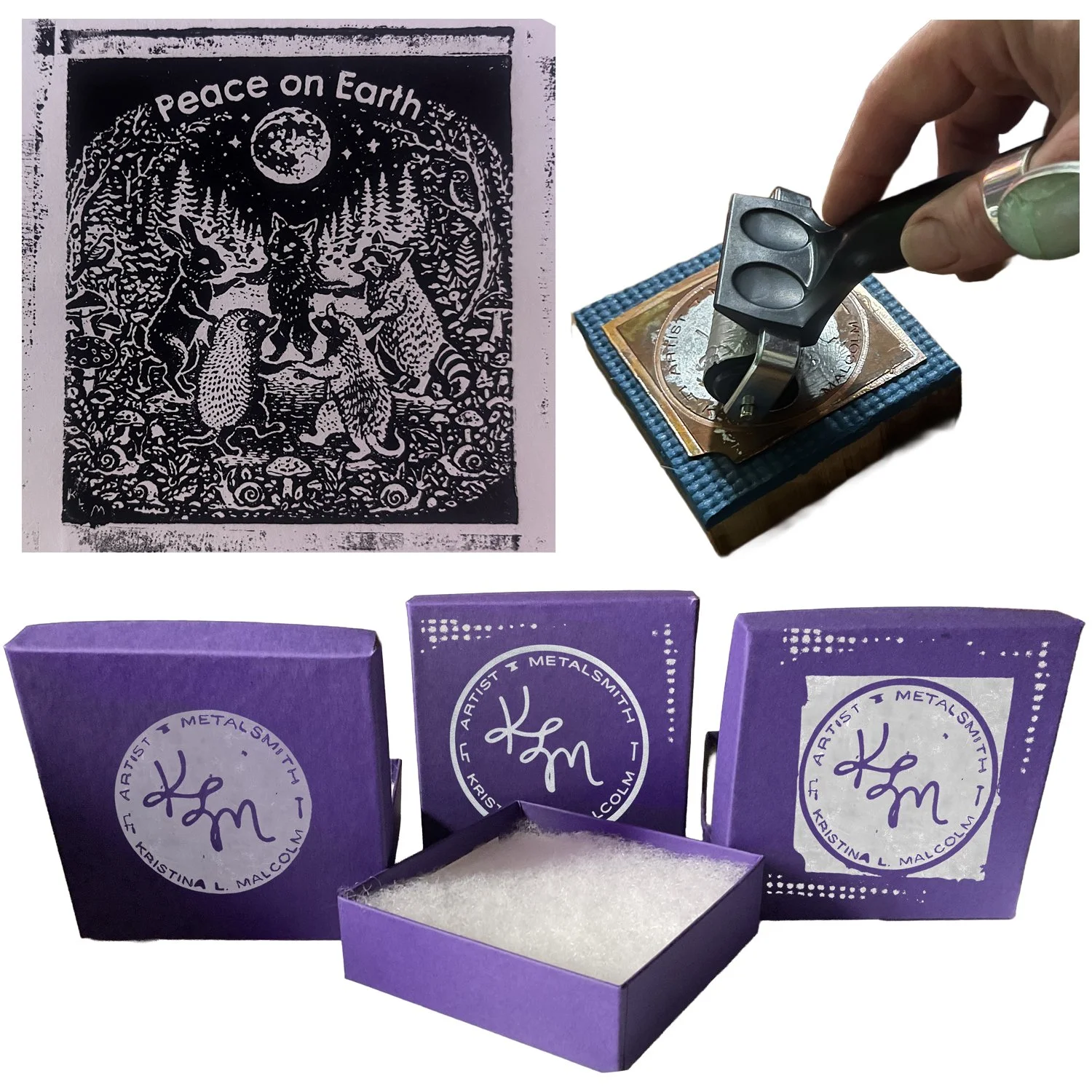
August 8, 15 & 22 from 11am - 1pm
This beginner-friendly online workshop introduces the creative and practical possibilities of printmaking through etched copper plates ✍️🟫 Designed for home studios, we will move through the full process of developing an image, preparing a plate, etching copper, and printing by hand. Makers may create imagery for personal artwork, cards, studio branding, packaging, holiday designs, or other printed uses 🎁💌🖋️ Alongside technique, we will also draw from my Healing Hands approach, considering how making can become an entry point to wellness through focus, rhythm, touch, problem-solving, and creative engagement 🌿👐✨
During the first session, we will focus on image development, plate planning, and resist techniques 🎨 We will discuss what kinds of imagery translate well into etched printmaking, including line, contrast, positive and negative space, and how a drawn or transferred image becomes an inked print. We will explore a range of resist options and methods for preparing copper plates from a home setup 🟧 This session also encourages thoughtful pacing and observation, helping makers become more aware of how concentration and handwork can support steadiness, confidence, and creative flow 🌊
The second session is devoted entirely to etching copper 🔥 We will learn two different approaches: ferric chloride etching and galvanic salt water etching ⚡🧂 We will compare these methods in terms of accessibility, setup, safety, timing, and visual results. This session will help us understand how to control the bite, protect areas of the plate, and troubleshoot common issues that arise during etching. It will also invite makers to approach process with patience and curiosity rather than perfectionism 💫
In the final session, we will learn how to ink and print our etched copper plates 🖤 We will cover basic wiping methods, paper choices, and accessible hand-printing approaches for home studios. We will explore ways to use finished prints in both artistic and practical applications 📦📜 By the end of the workshop, makers will leave with finished samples, a working understanding of intaglio printmaking, and a clearer sense of how their making practice can support both creative expression and wellbeing. 🌸
Nature Arts Fest
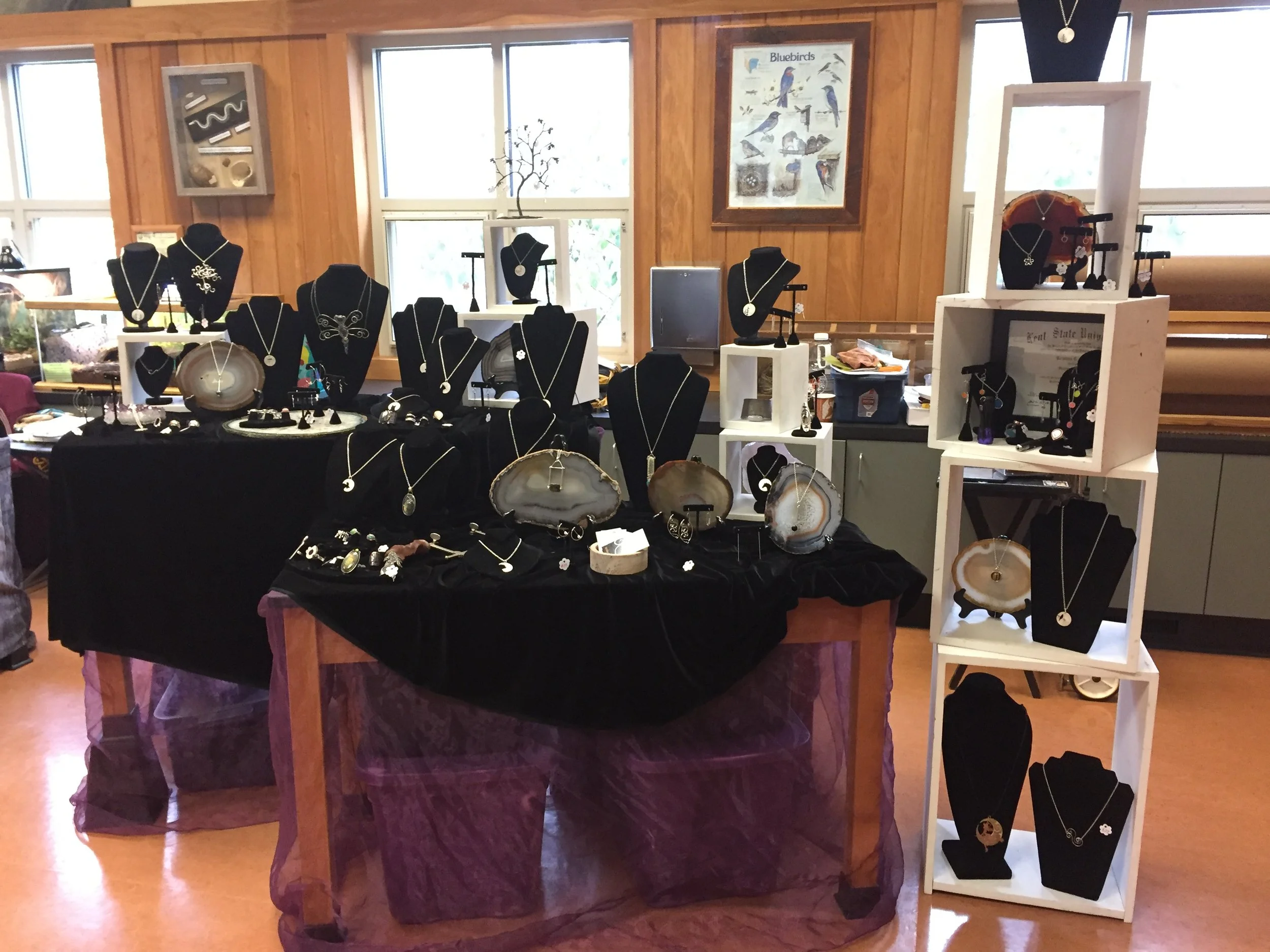
November 14th and 15th 2026
Oenslager Nature Center at Alderfer-Chatfield Wildlife Sanctuary
Nature themed hand-made art, just in time for the holidays!